CBSE vs Delhi Board PCM Coaching in Burari — Does It Matter Which You Follow?
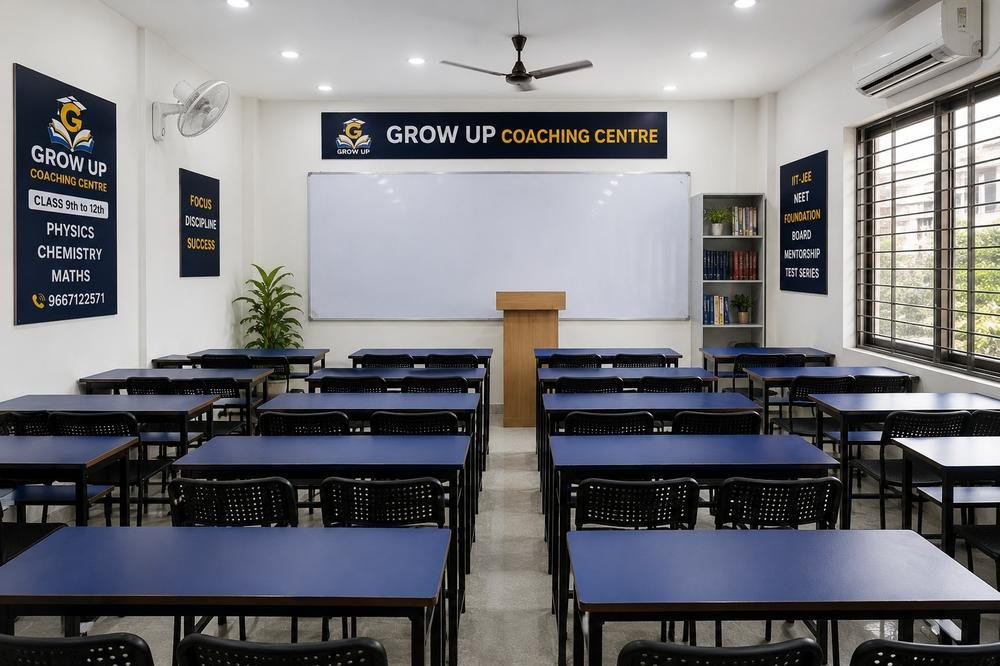
If you're a Class 11 or 12 PCM student in Burari, Sant Nagar, or nearby colonies like Bengali Colony, Nathupura, or Kamal Vihar, you've probably wondered: "Does it matter whether my coaching centre follows CBSE or Delhi Board syllabus?" It's a valid question, especially since students from both boards often sit in the same coaching classes.
The short answer is: yes, it does matter — but not in the way you might think. While the core concepts of Physics, Chemistry, and Mathematics are the same, the syllabus, exam pattern, and marking schemes differ. In this guide, I'll break down the key differences between CBSE and Delhi Board, how it affects your PCM coaching, and what to look for in a centre that can handle both effectively.
👉 Quick take: Both boards have their strengths — CBSE is more conceptual and application-oriented, while Delhi Board is more structured and focuses on detailed theoretical answers. A good coaching centre should be well-versed in both and adapt its teaching to your board. At Grow Up, we've taught thousands of students from both boards. Call 096671 22571 to book a free demo.
1. Understanding the Key Differences — CBSE vs Delhi Board PCM
Before we dive into the coaching implications, let's quickly understand the main differences between CBSE (Central Board of Secondary Education) and Delhi Board (Delhi State Board, now known as Delhi Board of School Education or DBSE):
- Syllabus: CBSE syllabus is more compact and designed to align with competitive exams like JEE and NEET. Delhi Board syllabus is more detailed and extensive, with a greater emphasis on theoretical explanations.
- Exam Pattern: CBSE exams have more objective-type questions (MCQs, case-based) and application-based problems. Delhi Board exams have more long-answer and descriptive questions, testing rote recall and detailed explanations.
- Marking Scheme: CBSE has a more flexible marking scheme with step-wise marking for numericals. Delhi Board often has stricter, more structured marking.
- Practical Exams: Both boards have practical exams, but the weightage and format can differ slightly.
Understanding these differences is crucial because your coaching needs to prepare you specifically for your board's requirements.
2. Does Coaching Need to Be Board-Specific?
Here's the good news: the fundamentals of PCM are the same for both boards. Newton's laws, chemical bonding, and calculus don't change based on your board. However, the application, depth, and exam presentation do differ. A good coaching centre should:
- Cover the core concepts thoroughly (which benefits both boards).
- Provide board-specific practice material and test papers.
- Teach exam-answering techniques tailored to your board's pattern.
- Offer additional support for topics that are unique to your board.
At Grow Up, our teachers have 10+ years of experience with both CBSE and Delhi Board. We don't treat you as a "CBSE student" or "Delhi Board student" — we treat you as a PCM student and then tailor the delivery to your board's requirements.
3. What Students from Each Board Should Look For
If you're a CBSE student, you should look for coaching that emphasises:
- Conceptual clarity and application of concepts.
- Practice with MCQs, case-based questions, and assertion-reasoning questions.
- Integration with JEE/NEET preparation (if you're aiming for competitive exams).
- Step-wise marking and presentation skills for numericals.
If you're a Delhi Board student, you should look for coaching that emphasises:
- Detailed theoretical explanations and derivations.
- Practice with long-answer and descriptive questions.
- Focus on writing structured answers with proper terminology.
- Coverage of the extensive syllabus with proper time management.
At Grow Up, we offer separate practice sessions and test series for CBSE and Delhi Board students, ensuring that each group gets the specific preparation they need.
4. The Myth of "One Board is Easier" — The Truth
I often hear students and parents say, "CBSE is easier" or "Delhi Board is tougher." The truth is, neither is inherently easier or harder — they're just different. CBSE tests your application skills and conceptual understanding. Delhi Board tests your depth of knowledge and ability to articulate detailed answers.
Some students excel in CBSE because they're good at applying concepts. Others excel in Delhi Board because they're good at memorising and reproducing detailed answers. The key is to understand your own strengths and choose a coaching centre that can help you leverage them for your specific board.
We've had students from both boards who have scored 95%+ with the right guidance. It's not about the board — it's about the preparation.
5. Should You Switch Boards in Class 12?
Switching boards in Class 12 is generally not recommended unless absolutely necessary (e.g., family relocation). Here's why:
- The syllabus and exam pattern are significantly different. You'll have to relearn how to answer questions.
- You'll miss out on the foundational teaching that your new board's students have received over the years.
- You may face additional paperwork and administrative hurdles.
Instead of switching boards, focus on mastering your current board with the right coaching. At Grow Up, we help students excel in whatever board they're in — no need to switch.
6. How Grow Up Coaching Centre Handles Both Boards Seamlessly
At Grow Up in Sant Nagar, Burari, we've been teaching PCM to students from both boards for over a decade. Here's how we do it:
- Integrated syllabus coverage: We cover the common core topics together, then address board-specific topics separately.
- Board-specific practice material: We provide separate question banks, practice sheets, and test papers for CBSE and Delhi Board students.
- Separate test series: We conduct separate mock tests for each board, mimicking the exact exam pattern and marking scheme.
- Expert teachers: Our teachers are well-versed in both boards and can switch between teaching styles seamlessly.
- Individual attention: In our small batches of 10–15 students, we can tailor our teaching to each student's board and learning pace.
Students from Bengali Colony, Nathupura, Kamal Vihar, and even Mukherjee Nagar have benefited from our dual-board expertise. We don't just teach PCM — we teach you how to succeed in your specific board exams.
7. A Word for Parents — What to Ask Before Enrolling
Parents, when you visit a coaching centre, don't forget to ask these board-specific questions:
- Does the centre have separate practice material for CBSE and Delhi Board?
- Are there separate test series for each board?
- Does the teacher have experience with both boards? Can they explain the key differences?
- How does the centre handle the different exam patterns and marking schemes?
- Will my child be prepared for their specific board's requirements, or is it a one-size-fits-all approach?
At Grow Up, we welcome these questions with open arms. We're proud of our ability to handle both boards effectively, and we invite you to see it for yourself during a free demo class.
Does it matter if my coaching centre follows CBSE or Delhi Board for PCM?
Yes, it can matter. The syllabus, exam pattern, and marking schemes differ. A good coaching centre should be well-versed in both and able to adapt its teaching to your board's requirements.
Can a coaching centre in Burari teach both CBSE and Delhi Board PCM students?
Absolutely. At Grow Up Coaching Centre, our teachers have experience with both boards and integrate the specific requirements seamlessly. We tailor our teaching to ensure students excel in their respective board exams.
Which board is easier for PCM — CBSE or Delhi Board?
CBSE is more conceptual and application-based, while Delhi Board follows a more structured, rote-friendly pattern. Neither is 'easier' — it depends on your learning style. Both require a solid understanding of fundamentals.
Should I switch boards in Class 12 for better PCM scores?
Switching boards in Class 12 is not recommended unless absolutely necessary. Each board has a specific curriculum and assessment pattern. Focus on mastering your current board rather than switching.
Looking for something more specific? See our State Board to CBSE Switch Guide page.
Book a FREE PCM Guide Demo
Sant Nagar, Burari · Mon–Sat 9 AM–9 PM · Call or WhatsApp 096671 22571
💬 WhatsApp a Demo