Class 11 Chemistry Chapter 1 & 2 – Basic Concepts + Structure of Atom
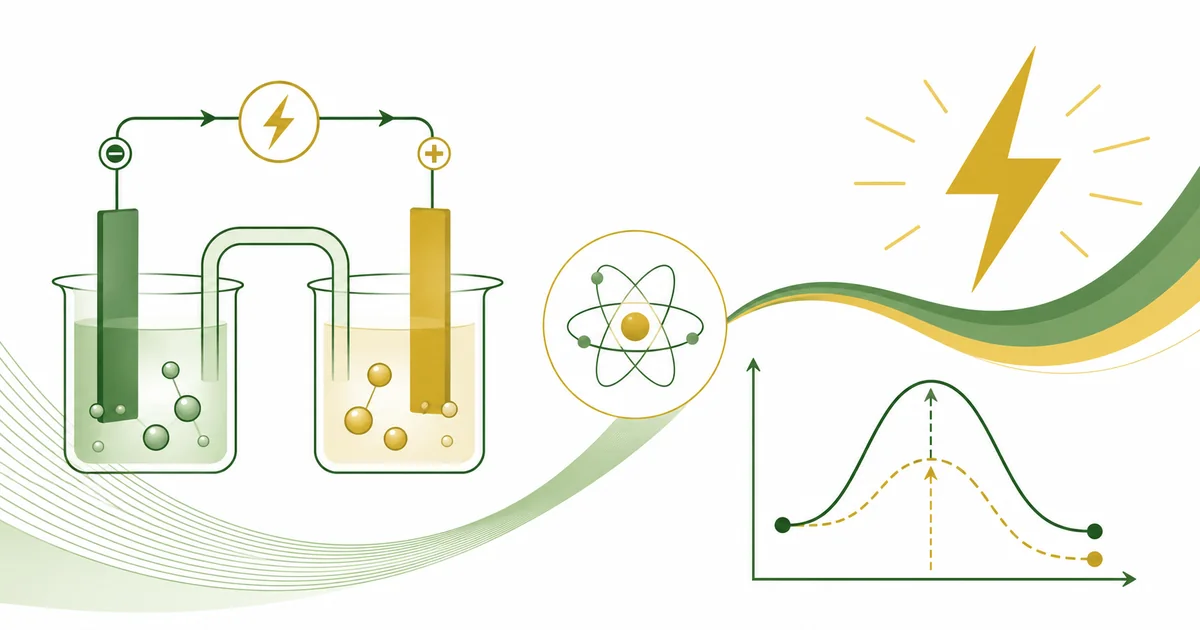
Class 11 Chemistry ke pehle 2 chapters — Some Basic Concepts of Chemistry aur Structure of Atom — Chemistry ki foundation hain. Bahut se students inhe casually padh lete hain — aur yeh galti pura year bhugatni padti hai, kyunki mole concept, atomic structure, quantum numbers har agle chapter mein use hote hain.
Class 11 Chemistry Chapters 1 (Some Basic Concepts) and 2 (Structure of Atom) are the foundation of the whole subject. Master the mole concept (1 mole = 6.022×10²³ particles), stoichiometry, limiting reagent, Bohr's model formulas, hydrogen spectrum and quantum numbers from NCERT — they recur in every later chapter. Free demo: 096671 22571.
- Chapter 1 — matter, laws, mole concept, stoichiometry
- Chapter 2 — atomic models, Bohr, spectrum, quantum numbers
- Common mistakes + FAQs
Chapter 1 – Some Basic Concepts of Chemistry
Laws of Chemical Combination
Conservation of Mass, Definite Proportions, Multiple Proportions, Gay Lussac's Law, Avogadro's Law. Har law ko example ke saath yaad karo.
Mole Concept — THE Most Important Topic
1 mole = 6.022×10²³ particles. Key formulas:
- Moles = Given mass / Molar mass
- Moles = Number of particles / Avogadro's number
- Moles of gas = Volume at STP / 22.4 L
Mole concept par mastery bina Class 11 Chemistry mein 60+ laana mushkil hai. Grow Up Classes mein iske liye 3 dedicated sessions hote hain.
Empirical / Molecular Formula & Stoichiometry
% → mass → divide by atomic mass → simplest ratio → empirical formula → molecular formula = n × empirical. Limiting reagent product ki amount decide karta hai.
Chapter 2 – Structure of Atom
Atomic Models
Thomson (plum pudding) → Rutherford (nucleus) → Bohr (quantized orbits, explained hydrogen spectrum) → Quantum mechanical model (orbitals).
Bohr's Model — Formulas
- En = −13.6/n² eV
- rn = 0.529 × n² Å
- vn = 2.18×10⁶ × (1/n) m/s
Hydrogen Spectrum
Lyman (UV), Balmer (Visible), Paschen/Brackett/Pfund (IR). Rydberg: 1/λ = R[1/n₁² − 1/n₂²], R = 1.097×10⁷ m⁻¹.
Quantum Numbers
- Principal (n): 1,2,3… (shell)
- Azimuthal (l): 0 to n−1 (subshell)
- Magnetic (ml): −l to +l
- Spin (ms): +½ or −½
Electronic Configuration
Aufbau, Pauli's exclusion, Hund's rule. Exceptions: Cr (3d⁵4s¹), Cu (3d¹⁰4s¹) — half/fully-filled stability.
Common Mistakes
- Mole concept basics skip karna — pehle conceptual samjho, phir formulas.
- Bohr's model formulas yaad nahi — En, rn, vn pakke questions hain.
- Quantum number restrictions — l = 0 to (n−1), ml = −l to +l.
- Configuration exceptions — Cr aur Cu.
Frequently Asked Questions
Chapter 1 sabse important kyun hai?
Mole concept, stoichiometry, atomic/molecular mass — yeh Class 11 aur 12 ke har chapter mein use hote hain.
Mole concept easily kaise samjhein?
Mole ko 'chemistry ka dozen' samjho — 1 mole = 6.022×10²³ particles; 1 mole element = its atomic mass in grams. 20-25 numericals practice karo.
Class 11 Chemistry coaching Sant Nagar mein kahan?
Grow Up Classes, Block B, Sant Nagar, Burari, Delhi 110084 — NCERT-focused coaching.
Configuration ke exceptions kya hain?
Cr = [Ar]3d⁵4s¹, Cu = [Ar]3d¹⁰4s¹ — half/fully-filled subshells extra stable.
Book a FREE Class 11 Chemistry Demo
Sant Nagar, Burari · Mon–Sat 9 AM–9 PM · Call or WhatsApp 096671 22571
💬 WhatsApp a Demo