Class 12 Maths Relations, Functions & Inverse Trigonometry — Chapter Guide for Burari Students
The first chapter of Class 12 Maths, Relations and Functions, is not just another topic. It is the logical backbone of everything that follows — from Calculus to Probability. Closely tied to it is Inverse Trigonometric Functions, a small but remarkably high-scoring chapter that appears in both board exams and competitive tests with clockwork regularity. If you are looking for solid Class 12 Maths Relations Functions coaching in Burari, this guide will walk you through every key concept, common pitfall, and exam-ready strategy I have used for over a decade at Grow Up Coaching Centre in Sant Nagar.
Why This Combined Block Opens Your Class 12 Maths Journey Perfectly
I have seen many students treat Relations and Functions as a lightweight theory chapter and then struggle later because they never truly understood what makes a function invertible. Inverse Trigonometric Functions, on the other hand, is short, formula-driven, and almost entirely predictable. Together, they account for roughly 8 to 10 marks in the CBSE board exam. In JEE Main, a question on the domain and principal value of an inverse trigonometric function or on the composition of functions appears almost every year. These are not marks you can afford to lose, because they are among the easiest to secure once you know the rules.
Students from Bengali Colony and Kamal Vihar who have attended our batches at Sant Nagar often tell me that these chapters, which they initially found abstract, became their strongest opening to the Class 12 syllabus. The key is understanding that relations are simply structured comparisons, functions are special relations that map each input to exactly one output, and inverse trigonometric functions answer the question: "What angle gave me this trigonometric value?" When you see them as interconnected, the subject loses its intimidation.
Relations and Functions — The Logical Core of Class 12 Maths
A relation R from set A to set B is a subset of A × B. The number of possible relations from A to B is 2|A|×|B|. For a relation to be reflexive, every element of A must relate to itself. For symmetry, if a relates to b, then b must relate to a. For transitivity, if a relates to b and b relates to c, then a must relate to c. An equivalence relation satisfies all three. These definitions are precise, and board examiners love to test them by giving a specific relation and asking you to determine which properties it satisfies. In our classroom at Sant Nagar, I make students write the complete roster form of the relation for small sets so they can actually see which ordered pairs satisfy the conditions. This visual check is far more reliable than trying to reason purely in the abstract.
Functions — The Special Relations That Rule Mathematics
A function f from set A to set B is a relation where each element of A appears exactly once as the first element in an ordered pair. One-one (injective) functions map distinct elements of A to distinct elements of B. Onto (surjective) functions cover every element of B. A bijective function is both one-one and onto, and only bijective functions are invertible. Composition of functions (g∘f)(x) = g(f(x)) is associative but not commutative. The identity function f(x) = x is the neutral element of composition. Many students confuse the condition for invertibility. For a function to be invertible, it must be bijective. If a function is not naturally one-one, you can restrict its domain to make it one-one. This idea of domain restriction is the bridge to Inverse Trigonometric Functions, and understanding it here makes that later chapter almost effortless.
Board exams frequently ask to check whether a given function f: R→R is one-one and onto. For a linear function f(x)=ax+b, it is always bijective if a≠0. For a quadratic like f(x)=x², it is not one-one over R because f(1)=f(-1). The graphical horizontal line test is your fastest friend here. If any horizontal line cuts the graph more than once, the function is not one-one. If any horizontal line does not cut the graph at all, the function is not onto. I draw these graphs repeatedly for my students in Burari until they can apply the test in seconds.
Inverse Trigonometric Functions — A Small Chapter with Big Rewards
The inverse trigonometric functions are sin⁻¹x, cos⁻¹x, tan⁻¹x, cot⁻¹x, sec⁻¹x, and cosec⁻¹x. The core of the chapter lies in their domains, ranges (principal value branches), and graphs. For sin⁻¹x, the domain is [-1,1] and the range is [-π/2, π/2]. For cos⁻¹x, the domain is [-1,1] and the range is [0, π]. For tan⁻¹x, the domain is R and the range is (-π/2, π/2). Write these three on a small card and carry it with you for a week. The other three inverse functions are rarely tested in depth but you must know their principal values: cot⁻¹x has range (0, π), sec⁻¹x has range [0, π] - {π/2}, and cosec⁻¹x has range [-π/2, π/2] - {0}.
The Principal Value Branch — Your Most Tested Concept
The principal value branch ensures that each inverse trigonometric function returns a unique value. When a question asks for the principal value of sin⁻¹(1/2), the answer is π/6, not 5π/6 or any other angle where sine equals 1/2. I train students at Grow Up Coaching Centre to immediately check two things: is the input within the domain? If yes, the output must lie within the principal value range. A classic mistake is giving cos⁻¹(1/2) as π/3, which is correct, but sin⁻¹(-1/2) as 7π/6 instead of -π/6. The range of sin⁻¹x includes negative angles, but the range of cos⁻¹x does not. Knowing these ranges cold is the single most valuable thing you can do for this chapter.
Properties and Identities — The Formula Cluster
The most useful identities are: sin⁻¹x + cos⁻¹x = π/2 for x ∈ [-1,1], tan⁻¹x + cot⁻¹x = π/2 for x ∈ R, sec⁻¹x + cosec⁻¹x = π/2. There are also the conversion formulas: sin⁻¹(1/x) = cosec⁻¹x, cos⁻¹(1/x) = sec⁻¹x, and tan⁻¹(1/x) = cot⁻¹x. The formula 2tan⁻¹x = tan⁻¹(2x/(1-x²)) and its variations are extremely important for board derivations and JEE simplifications. Practise writing these identities from memory. A question that asks you to simplify an expression like sin⁻¹(3/5) + cos⁻¹(12/13) will often use the conversion to tan⁻¹ and then apply the tan addition formula. It is a standard pattern.
Common Mistakes in Relations, Functions, and Inverse Trigonometry
Over the years of marking answer sheets from students across 110084, I have compiled the errors that cost the most marks.
- Forgetting to check all three properties for an equivalence relation. Reflexivity, symmetry, and transitivity must all hold. Many students check reflexivity and symmetry, assume transitivity is obvious, and skip it. Transitivity is the most frequently violated property. Always write out the specific ordered pairs and test transitivity explicitly. If (a,b) and (b,c) are in R, then (a,c) must be in R.
- Confusing one-one with onto. A function can be one-one without being onto, and onto without being one-one. To check one-one, assume f(x₁)=f(x₂) and prove x₁=x₂ algebraically, or use the horizontal line test. To check onto, verify that for every y in the codomain, there exists an x in the domain such that f(x)=y. The approach is different for each property.
- Writing the principal value outside the allowed range. For sin⁻¹x, the answer must be between -π/2 and π/2 inclusive. For cos⁻¹x, between 0 and π. For tan⁻¹x, strictly between -π/2 and π/2. If your answer falls outside this range, adjust it using the periodic properties of the trigonometric functions before finalising.
- Applying the formula 2tan⁻¹x = tan⁻¹(2x/(1-x²)) without checking the sign and domain. This formula holds only when |x| < 1. If |x| > 1, a different expression applies. Board questions often test this domain condition. Read the question carefully before applying the formula blindly.
- Ignoring the difference between a relation and a function. A relation is any subset of A×B. A function is a special relation where each element of the domain has exactly one image. In multiple-choice questions, an option that describes a relation may look like a function but violate the "exactly one" rule. Check every element of the domain individually.
How to Study These Chapters for Maximum Marks
- Create a one-page table of all inverse trigonometric domains and ranges. Divide the page into six rows, one for each function. Write the function, its domain, its range, and its graph shape. Review this page every morning for two weeks. This single habit will eliminate most of the careless errors students make in this chapter.
- Practise writing formal proofs for one-one and onto. For one-one, start with f(x₁)=f(x₂) and derive x₁=x₂. For onto, start with y in the codomain and solve f(x)=y for x, showing that the solution lies in the domain. These proofs follow a template. Learn the template, and you can handle any function they give you.
- Solve all NCERT examples and exercises for Relations and Functions. The NCERT back-of-chapter questions contain exactly the kind of relation-checking and function-analysing problems that appear in boards. Do them sequentially. Do not skip the miscellaneous exercise.
- For Inverse Trigonometry, practise simplification problems every day for ten minutes. Pick two or three expressions involving sin⁻¹, cos⁻¹, and tan⁻¹, and simplify them using identities. The patterns become recognisable after about thirty problems. JEE Main questions in this chapter are almost entirely simplification-based, and board questions focus on principal values and basic identities.
Why Personalised Coaching Transforms Abstract Maths into Clear Logic
Relations and Functions can feel abstract because they deal with sets, ordered pairs, and logical conditions rather than numbers. A student sitting in a large class might hear the definition of an equivalence relation, nod along, and never realise they did not understand transitivity until they fail a test question. At Grow Up Coaching Centre in Sant Nagar, Burari, I work with every student individually on these definitions. I ask them to create a small set A = {1,2,3} and a relation, then test each property aloud. That verbal and written practice, with a teacher listening and correcting, solidifies the concepts in a way no textbook can.
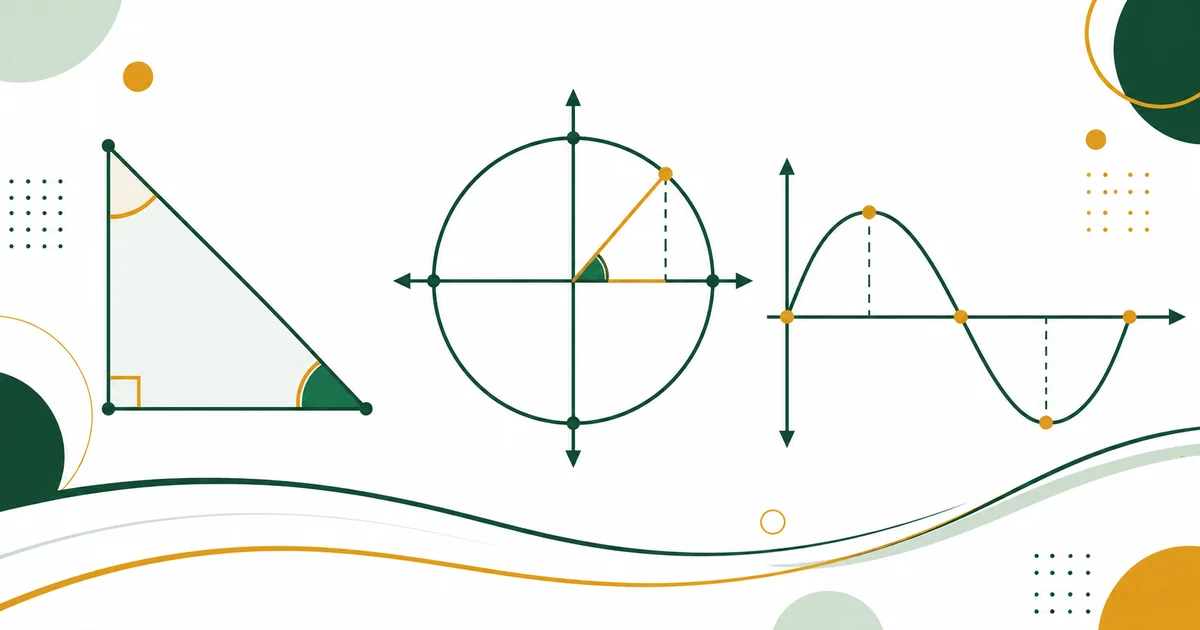
Inverse Trigonometric Functions is a chapter where one good session on the unit circle can unlock everything. I draw the unit circle on the board, mark the principal value ranges in different colours, and ask students to locate where each inverse function's output lives. Students from Nathupura and Rishi Nagar have told me that after that one session, they never confused sin⁻¹ and cos⁻¹ ranges again. That is the power of visual, small-group teaching.
Three Practical Tips from a Teacher with a Decade of Experience
Tip 1: Use the "arrow diagram" for relations. When checking properties of a relation on a finite set, draw two ovals representing the domain and codomain, place the elements inside, and draw arrows for each ordered pair in the relation. Reflexivity means every element in the domain has a self-loop. Symmetry means every arrow from a to b has a matching arrow from b to a. Transitivity means if there is a path from a to b to c, there must be a direct arrow from a to c. This visual method turns a logic puzzle into a simple diagram check.
Tip 2: Memorise the principal value ranges as intervals on the number line. sin⁻¹: [-π/2, π/2]. cos⁻¹: [0, π]. tan⁻¹: (-π/2, π/2). Visualise these intervals as segments of the unit circle. sin⁻¹ covers the right half and a bit more; cos⁻¹ covers the top half; tan⁻¹ covers the right open half. Drawing the circle takes ten seconds and instantly confirms whether your answer is in the correct range.
Tip 3: For composition of functions, always work from the inside out. To find (g∘f)(x), first compute f(x), then feed that result into g. If the problem asks for (f∘g)(x), compute g(x) first. Many students reverse the order. Write a note to yourself: "Composition: apply the rightmost function first." This simple reminder prevents a whole category of errors.
Why Grow Up Coaching Centre Is the Right Choice for Class 12 Maths in Burari
We are a small, focused coaching centre in Sant Nagar, 110084 that believes Maths is best learned in a conversation, not a monologue. Our Class 12 batches are deliberately small so that every student can ask questions during the lesson, not after it. We cover Relations and Functions with patience, we drill Inverse Trigonometric identities until they are second nature, and we connect every concept to the kind of questions that actually appear in board exams and JEE. Families from Bengali Colony, Kamal Vihar, Himgiri Enclave, and across Burari have trusted us with their children's Maths education for years, and we take that trust seriously.
These opening chapters set the tone for the entire year. Start strong, and the rest of the syllabus feels manageable. Start confused, and the confusion compounds. I am here to make sure every student starts with clarity and confidence.
Book a Free Demo Class and Start Your Class 12 Maths Right
You can experience our approach without any commitment. We offer a free demo class on Relations and Functions or Inverse Trigonometric Functions. See how we explain one-one and onto with clear diagrams, or how we simplify inverse trigonometric expressions step by step. There is no cost and no pressure.
To schedule your free demo, call or send a WhatsApp message to 096671 22571. You are also welcome to visit us at Grow Up Coaching Centre, Sant Nagar, Block B, Burari, New Delhi – 110084. We are easy to find and eager to meet new learners. If our teaching has already helped you or your child, please take a moment to leave a Google review. It helps families across Burari find quality Class 12 Maths Relations Functions coaching in Burari, and your honest feedback means the world to a small local centre like ours.
You may also find our other PCM study guides helpful as you plan your preparation.
FAQs
What is the difference between a relation and a function in Class 12 Maths?
A relation from set A to set B is any subset of the Cartesian product A × B, meaning it is simply a collection of ordered pairs. A function is a special type of relation where every element of the domain A appears exactly once as the first element of an ordered pair. In other words, each input has exactly one output. This precise condition is what separates functions from general relations and is a fundamental concept tested in board exams.
How can I easily remember the principal value branches of inverse trigonometric functions?
The easiest method is to group them. For sin⁻¹x, the range is [-π/2, π/2]; for cos⁻¹x, [0, π]; for tan⁻¹x, (-π/2, π/2). The other three can be derived using the identities cot⁻¹x = π/2 - tan⁻¹x, sec⁻¹x = cos⁻¹(1/x), and cosec⁻¹x = sin⁻¹(1/x). Drawing the unit circle and shading the principal value ranges helps create a visual memory. Review this circle diagram daily for a week, and the ranges will become permanent.
Where can I get dedicated Class 12 Maths coaching for Relations and Functions in Burari?
Grow Up Coaching Centre in Sant Nagar, Block B, Burari, New Delhi – 110084 provides focused Class 12 PCM coaching with small batches and personal attention. The centre covers Relations, Functions, Inverse Trigonometry, and all other Class 12 Maths topics with a conceptual, exam-oriented approach suitable for CBSE and JEE. Students from Sant Nagar, Bengali Colony, Kamal Vihar, Nathupura, and all nearby areas can easily attend. To book a free demo class, call or WhatsApp 096671 22571.
Book a FREE Class 12 Maths Demo
Sant Nagar, Burari · Mon–Sat 9 AM–9 PM · Call or WhatsApp 096671 22571
💬 WhatsApp a Demo