Class 11 Chemistry Organic Basics (GOC) & Hydrocarbons — Beginner's Roadmap for Burari Students
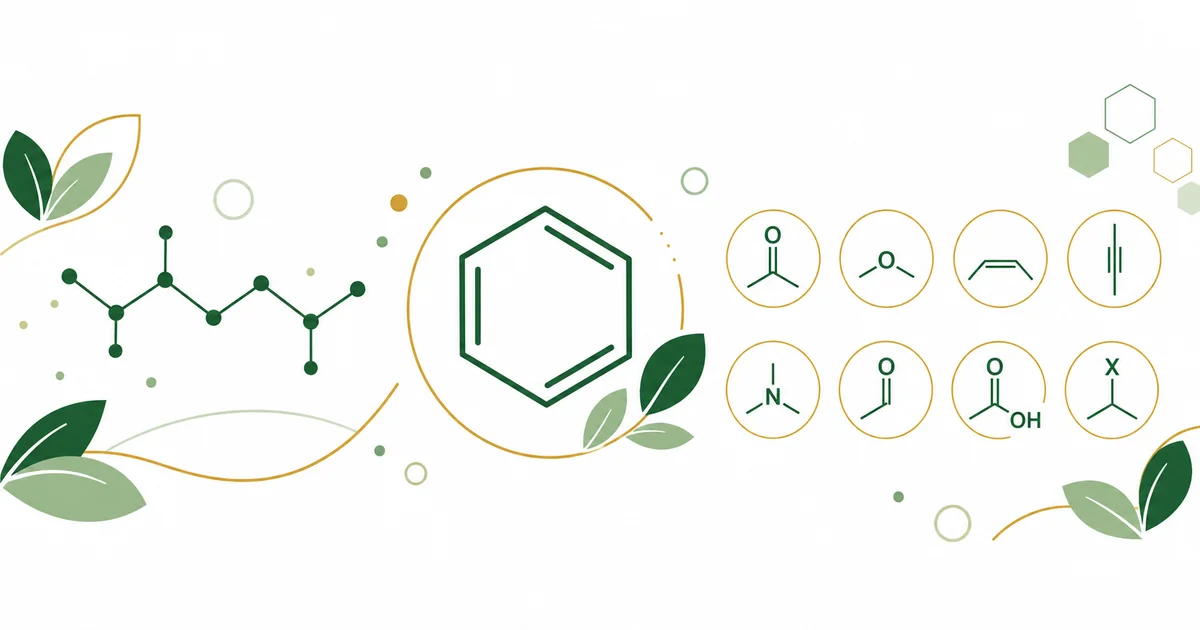
Every year I meet Class 11 students who walk into my classroom with a single fear: Organic Chemistry. They have heard it is all memorisation, endless reactions, and confusing names. That could not be further from the truth. Organic Chemistry is the most logical part of Chemistry — once you understand the why behind the reactions. If you are looking for Class 11 Chemistry Organic Chemistry coaching in Burari, I have designed this guide exactly the way I teach at Grow Up Coaching Centre in Sant Nagar: from first principles, with zero unnecessary memorisation.
Can You Study Hydrocarbons Without GOC?
Short answer: no — and here is why. You can technically read Hydrocarbons on its own, but you will only be memorising reactions instead of understanding them. GOC (General Organic Chemistry) teaches how electrons move — inductive effect, resonance, hyperconjugation and the stability of carbocations. Every important Hydrocarbon reaction (Markovnikov addition, free-radical halogenation, aromatic substitution) is just those electron rules applied to real molecules. Learn GOC first, even a basic version, and Hydrocarbons becomes logical instead of a memory test.
What about isomerism? You need only the structural and basic stereo isomerism ideas before Hydrocarbons — mainly so you can name compounds and see why cis/trans and chain vs. position isomers behave differently. You do not need advanced optical isomerism (R/S, chirality) to start Hydrocarbons; that can come slightly later. So the correct order is: basic GOC + structural isomerism → Hydrocarbons → advanced stereochemistry.
Why Organic Chemistry Decides Your Entire Class 11 Chemistry Score
Let me give you the honest picture. General Organic Chemistry (GOC) and Hydrocarbons together form the foundation of every organic reaction you will study in Class 12 PCM and beyond. GOC teaches you how electrons move — that is all organic reactions really are, electrons shifting from one atom to another. Hydrocarbons give you the first real practice of applying those electron shifts to actual molecules. Students who ignore GOC and jump straight to memorising hydrocarbon reactions end up confused and frustrated. Students who master GOC first find hydrocarbons almost effortless.
I have taught students from Bengali Colony and Kamal Vihar who were terrified of Chemistry in April and scoring above 90 by October, simply because they sat down and understood inductive effect, resonance, and hyperconjugation before touching a single reaction. These chapters carry 12 to 15 marks in the CBSE board exam and are heavily tested in JEE Main and NEET. More importantly, they are the gateway to the 28 marks of organic chemistry in Class 12. A weak start here haunts you for two full years.
General Organic Chemistry (GOC) — The Rulebook of Organic Reactions
Think of GOC as the grammar of a new language. Before you can write sentences, you need to know the rules of how words connect. GOC gives you the rules of how atoms and electrons connect. It covers the following core ideas: the tetravalency of carbon, structural representation of organic molecules, classification of organic compounds, nomenclature, isomerism, and the electronic effects that govern reactivity. Every single one of these is important, but the electronic effects are the true heart of the chapter.
Electronic Effects — Inductive, Resonance, and Hyperconjugation
The inductive effect is the permanent shift of electrons along a sigma bond due to electronegativity differences. Groups that pull electrons are -I (like -NO₂, -Cl, -COOH); groups that push electrons are +I (like alkyl groups). This effect decides the acidity of carboxylic acids, the basicity of amines, and the stability of carbocations. Resonance is the delocalisation of pi electrons across adjacent p-orbitals. When a molecule has alternating single and double bonds, the electrons do not stay fixed — they spread out, creating a hybrid that is more stable than any single Lewis structure. Hyperconjugation is the interaction of sigma electrons of a C-H bond with an adjacent empty or partially filled p-orbital. It explains why more substituted carbocations are more stable — and that stability order (3° > 2° > 1° > methyl) is asked in almost every competitive exam.
Why Students Confuse These Three Effects
Inductive effect operates through sigma bonds. Resonance operates through pi bonds and lone pairs. Hyperconjugation involves sigma bonds next to a carbocation or a double bond. I tell my students in Sant Nagar to create a small table with three columns: type of effect, the bond it works through, and a real example from the NCERT textbook. Whenever a question asks about stability or acidity, check which effect is dominant in that molecule and apply the rule. This simple habit cuts confusion by eighty percent.
Isomerism — The Shapeshifters of Organic Chemistry
Isomerism is the phenomenon where compounds have the same molecular formula but different structures or spatial arrangements. Structural isomerism includes chain, position, functional group, and metamerism. Stereoisomerism includes geometrical and optical isomerism. Geometrical isomerism arises due to restricted rotation around a double bond — the classic cis/trans or E/Z naming. Optical isomerism occurs when a molecule has a chiral centre, usually a carbon attached to four different groups. A chiral molecule rotates plane-polarised light and has a non-superimposable mirror image called an enantiomer.
The most common exam mistake with isomerism is missing a structural isomer or counting the same isomer twice. I teach a systematic method: for a given formula, first draw all possible carbon skeletons, then place the functional group at every non-equivalent position, then fill in the hydrogens. This ordered approach, practised twenty times, makes isomer counting a guaranteed full-mark question.
Hydrocarbons — Where Theory Meets Real Molecules
Hydrocarbons are the simplest organic compounds — only carbon and hydrogen. They are divided into alkanes (saturated, single bonds), alkenes (double bond), alkynes (triple bond), and aromatic hydrocarbons (benzene and its derivatives). Class 11 covers alkanes, alkenes, alkynes, and a brief introduction to aromaticity. The reactions of hydrocarbons are where you first apply the electronic effects from GOC. Markovnikov's rule, for instance, makes perfect sense when you understand carbocation stability and hyperconjugation.
Alkanes — The Foundation
Alkanes are relatively unreactive, which is why they are called paraffins (little affinity). Their main reactions are combustion, halogenation via free radical mechanism, and cracking. The free radical halogenation has a clear order of reactivity for halogens: F₂ > Cl₂ > Br₂ > I₂. Fluorine is too violent and not used; iodine is too slow. Chlorine and bromine are the practical choices. The selectivity of bromine versus chlorine — bromine being more selective for the most stable radical — is a classic conceptual question. Board exams may ask for the mechanism; JEE will ask for the product distribution.
Alkenes and Alkynes — The Reactive Unsaturated Hydrocarbons
Alkenes undergo electrophilic addition reactions. The pi bond is electron-rich and attracts electrophiles. Markovnikov's rule states that the hydrogen adds to the carbon that already has more hydrogens, resulting in the more stable carbocation intermediate. Anti-Markovnikov addition happens only in the presence of peroxides (peroxide effect or Kharasch effect) and is exclusive to HBr, not HCl or HI. Why? Because the H-Cl bond is too strong to be broken homolytically by peroxide radicals, and the H-I bond, though weak, produces iodine radicals that combine with each other rather than adding to the double bond. These fine-print details separate a good answer from an excellent one.
Alkynes add two equivalents of halogen or hydrogen halide. The hydration of alkynes (adding water) produces an enol that tautomerises to a carbonyl compound. Terminal alkynes are acidic and form a grey precipitate with ammoniacal silver nitrate (Tollens reagent) — a test for the terminal -C≡C-H group. This reaction is a favourite in CBSE practical-based questions and in NEET organic identification problems.
Aromatic Hydrocarbons — The Introduction to Benzene
Benzene and its derivatives are introduced in Class 11, though the detailed reactions are reserved for Class 12. The key concept here is aromaticity: a planar, cyclic, conjugated system with (4n+2) pi electrons — Hückel's rule. Benzene has 6 pi electrons (n=1), so it is aromatic. It undergoes electrophilic substitution, not addition, because addition would destroy the aromatic stability. Understanding why benzene resists addition is the single most important conceptual question from this section. I always draw the potential energy diagram comparing addition to substitution — the visual makes the logic unforgettable.
Common Mistakes in GOC and Hydrocarbons
After a decade of marking Organic Chemistry answer sheets, I can list the errors that cost students the most marks.
- Drawing incomplete or incorrect arrows in mechanisms. Curly arrows must start from a bond or a lone pair and end at an atom or between two atoms. A full arrow head means two electrons are moving; a fish-hook arrow head means one electron. Showing the arrow starting from a positive charge or ending in empty space is incorrect. In our small coaching batches at Burari, I correct arrow drawing in every single mechanism until it becomes muscle memory.
- Forgetting the solvent or condition in a reaction. Writing "HBr" is not enough — you must specify whether peroxides are present. The product changes entirely. Similarly, hydration of alkynes needs HgSO₄ and dilute H₂SO₄. Leaving out the catalyst loses marks in board exams and can make the answer wrong in JEE.
- Counting the same isomer twice or missing one. A systematic skeleton-and-substitution method solves this. Rushing without a method leads to errors. When in doubt, draw every isomer and cross-check the names.
- Applying Markovnikov's rule blindly without checking the intermediate stability. If a carbocation rearrangement (hydride or methyl shift) can occur to form a more stable carbocation, the product will be from the rearranged intermediate. Many students stop at the initially formed carbocation and get the wrong final product. Always scan for possible rearrangements before writing the answer.
- Writing the structure of benzene incorrectly in resonance-based questions. Benzene's two Kekulé structures are resonance contributors, not separate species in equilibrium. The true structure is a hybrid with equal bond lengths. Drawing the circle inside the hexagon is a perfectly acceptable representation that avoids the common misconception.
How to Master Organic Chemistry from Day One
Here is the approach I use with every batch at Grow Up Coaching Centre, and it has worked for students from Nathupura, Rishi Nagar, and Himgiri Enclave alike.
- Read the NCERT GOC chapter twice before attempting any reference book. The NCERT explanations of electronic effects are clear and concise. The in-text questions are excellent. Do every solved example. Then do the exercise questions. Only then move to supplementary material.
- Create a reaction notebook, not a reaction chart. For each reaction you learn, write the reactant, reagent, condition, product, and the mechanism in brief. Use a new page for each functional group transformation. This becomes your personalised revision guide. The act of writing it yourself is far more effective than reading a printed chart.
- Practise IUPAC naming daily for five minutes. Nomenclature is pure rule-following. The rules are: identify the longest carbon chain containing the principal functional group, number the chain to give the functional group the lowest possible number, name the substituents alphabetically, and use prefixes like di-, tri- for multiple identical substituents. There are about twenty rules total. Five minutes of naming practice every day makes you fluent within a month.
- Connect each reaction to the electronic effect that drives it. Alkene addition is electrophilic because the pi bond is electron-rich. Markovnikov addition goes through the most stable carbocation. Anti-Markovnikov addition with HBr/peroxide goes through the most stable free radical. When you understand the driver, you do not need to memorise the product — you can predict it.
Why Learning Organic Chemistry in a Small Batch Makes a Huge Difference
Organic Chemistry is a subject where one misunderstanding can cascade into a hundred errors. If a student thinks resonance means the molecule oscillates between two structures, every subsequent concept built on resonance will be shaky. In a large classroom, that misunderstanding might never be caught. At Grow Up Coaching Centre in Sant Nagar, Burari, I can spot these foundational gaps because I interact individually with every student. When I ask "why does benzene not undergo addition?" and a student hesitates, I know we need to revisit the meaning of aromatic stability before moving forward.
Students from Amrit Vihar and Harit Vihar have told me that Organic Chemistry became their favourite subject after they joined our small batches. That shift happens when chemistry stops being a list of reactions and becomes a logical story of electrons. We tell that story patiently, with diagrams, with models, and with the time it takes for every student to genuinely understand.
Three Practical Tips from an Experienced Chemistry Teacher
Tip 1: Use the "electron tracker" method. When studying any organic reaction, take two coloured pens. Use one colour to trace where each electron pair goes from the reactant to the product. A reaction is nothing but electrons moving from an area of high density (nucleophile) to an area of low density (electrophile). Tracing electrons visually turns a confusing reaction into a clear map. Do this for ten reactions and the pattern recognition becomes automatic.
Tip 2: Master the priority order for functional groups in IUPAC nomenclature early. Carboxylic acid > sulphonic acid > ester > acid chloride > amide > nitrile > aldehyde > ketone > alcohol > amine > alkene > alkyne. Memorise this order now. It determines which group gets the suffix and which gets the prefix. A single mistake in priority changes the entire name. Write this list on the inside cover of your chemistry notebook.
Tip 3: Draw all resonance structures for a given species, even if the question does not ask for them. Many questions on stability, acidity, and basicity can be answered correctly just by seeing which ion has more resonance stabilisation. The ion with more equivalent resonance structures is always more stable. This rule alone solves about a quarter of the conceptual questions in GOC. Make it a habit — draw the structures, count the contributing forms, and compare.
Why Grow Up Coaching Centre Is Trusted for Class 11 Chemistry in Burari
We are a neighbourhood coaching centre with a single mission: to teach Class 10 and Class 11-12 PCM in a way that makes students genuinely understand and enjoy their subjects. Our chemistry classes in Sant Nagar, 110084 are small, focused, and filled with the kind of discussions that make difficult concepts click. Parents from Bengali Colony, Kamal Vihar, Nathupura, and beyond have trusted us for years because they see the change in their children — from dreading Chemistry to explaining reactions to their friends.
GOC and Hydrocarbons are not hard. They are different. Different from anything you studied in Class 10. That difference needs a teacher who can bridge it gently, with patience and clarity. That is exactly what we do.
Book Your Free Demo Class Today
You can experience our approach without any commitment. We offer a free demo class for Class 11 Chemistry — you attend a live session, see how we teach, and decide if it feels right for you. No pressure, no sales pitch, just a genuine class.
To schedule your free demo, call or send a WhatsApp message to 096671 22571. You are also welcome to visit our centre at Sant Nagar, Block B, Burari, New Delhi – 110084. We are easy to find and always happy to meet new students and parents. If our teaching has already helped you or your child, please take a moment to leave a Google review. It helps families across Burari discover quality Class 11 Chemistry Organic Chemistry coaching in Burari, and every review helps a small local centre continue doing what it loves.
You may also find our other PCM study guides helpful as you plan your preparation.
FAQs
Can I study Hydrocarbons without GOC?
It is not recommended. Without GOC you can only memorise Hydrocarbon reactions, not predict them. GOC explains why reactions happen — how electrons shift through inductive effect, resonance and hyperconjugation, and why some carbocations are more stable than others. Once you know that, Markovnikov's rule, free-radical halogenation and addition reactions all make sense. Spend a few days on basic GOC first and Hydrocarbons becomes far easier.
Can I study Hydrocarbons without isomerism?
You need only the basics of isomerism before Hydrocarbons — mainly structural isomerism (chain, position, functional) and a simple idea of cis/trans, so you can name compounds and understand why isomers react differently. Advanced optical isomerism and chirality (R/S) are not required to begin Hydrocarbons and can be learned a little later. The ideal order is basic GOC and structural isomerism first, then Hydrocarbons, then advanced stereochemistry.
What is the most important topic in GOC for CBSE Class 11 exams?
The most important topics in General Organic Chemistry are the electronic effects — inductive effect, resonance, hyperconjugation — and their application to stability of carbocations, carbanions, and free radicals. IUPAC nomenclature and structural isomerism are also heavily tested. Board exam questions frequently ask students to explain the stability order of intermediates or to identify the correct resonance structures of a given compound.
How can I remember all the hydrocarbon reactions without getting confused?
The best way is to group reactions by mechanism rather than by individual reagent. All alkene reactions are electrophilic additions, and the product can be predicted by Markovnikov's rule unless peroxides are present. All alkane halogenation follows free radical mechanism. Creating a mechanism-based reaction map instead of a reagent-based list reduces confusion significantly and helps in predicting products for unfamiliar reagents.
Where can I get personal attention for Organic Chemistry coaching in Burari?
Grow Up Coaching Centre in Sant Nagar, Block B, Burari, New Delhi – 110084 offers small-batch Class 11 Chemistry coaching with a focus on conceptual understanding. The centre covers GOC, Hydrocarbons, and all other Class 11 topics with individual attention and continuous doubt-clearing. Students from Sant Nagar, Bengali Colony, Kamal Vihar, Nathupura, and nearby areas can easily attend. To book a free demo class, call or WhatsApp 096671 22571.
Book a FREE Class 11 Chemistry Demo
Sant Nagar, Burari · Mon–Sat 9 AM–9 PM · Call or WhatsApp 096671 22571
💬 WhatsApp a Demo