Class 11 Chemistry Thermodynamics & Equilibrium — Complete Chapter Guide for Burari Students
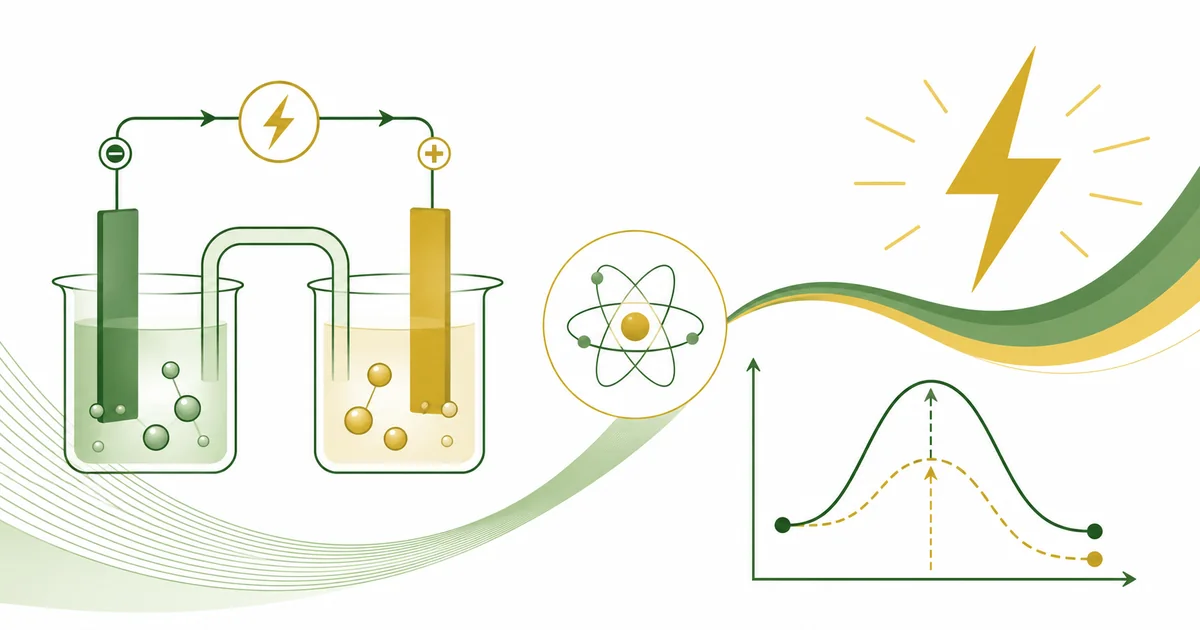
Thermodynamics and Chemical Equilibrium are two chapters that genuinely make or break a student's confidence in Class 11 Chemistry. They are dense, equation-heavy, and deeply conceptual, but they are also among the most predictable chapters in the entire syllabus. If you are searching for Class 11 Chemistry Thermodynamics coaching in Burari, this guide contains exactly what I teach in my classroom at Grow Up Coaching Centre in Sant Nagar — clear explanations, exam-focused strategies, and the common mistakes I have corrected hundreds of times over ten years of teaching.
Why These Two Chapters Are the Heart of Class 11 Physical Chemistry
Let me explain the stakes. Thermodynamics introduces you to the language of energy — enthalpy, entropy, and Gibbs free energy. These terms will follow you into Class 12 PCM Chemical Kinetics, Electrochemistry, and even Physics. Equilibrium teaches you how chemical reactions settle into a dynamic balance, and the concept of the equilibrium constant Kc and Kp is one of the most tested numerical topics in both board exams and JEE. Together, these two chapters account for roughly 12 to 14 marks in the CBSE Class 11 Chemistry paper. In JEE Main, thermodynamics and equilibrium consistently yield 2 to 3 questions. I have seen students from Bengali Colony and Nathupura who initially found these chapters intimidating, but after a few sessions of systematic problem-solving, they became their strongest scoring areas. The key is to stop seeing them as a collection of formulas and start seeing them as a logical framework that describes how energy and matter behave.
Thermodynamics — The Science of Energy Changes
Chemical Thermodynamics deals with the energy changes that accompany chemical reactions. The chapter covers the first law of thermodynamics, the concepts of internal energy, work, heat, enthalpy, and the all-important concepts of entropy and Gibbs free energy that determine whether a reaction will occur spontaneously. The first law is simply the conservation of energy applied to chemical systems: ΔU = q + w, where ΔU is the change in internal energy, q is the heat supplied to the system, and w is the work done on the system. The sign conventions are critical and are a frequent source of exam errors. In our small batches at Sant Nagar, Burari, I make every student write the sign convention rules at the top of every thermodynamics problem: heat absorbed by the system is positive, work done by the system is negative, and so on. This tiny habit eliminates half the mistakes students make in this chapter.
Enthalpy and Hess's Law — The Calculation Heavyweights
Enthalpy H is defined as U + PV, and the change in enthalpy ΔH equals the heat absorbed or released at constant pressure. The standard enthalpy of formation, combustion, neutralisation, and solution are all defined with reference to standard states. Hess's Law states that the total enthalpy change for a reaction is independent of the path taken. This allows you to calculate the enthalpy of a reaction by combining the enthalpies of formation of products and reactants: ΔH°reaction = Σ ΔH°f(products) - Σ ΔH°f(reactants). This single formula is the most used numerical tool in the chapter. Board questions often give you a set of enthalpy of formation values and ask you to calculate the enthalpy of combustion or the enthalpy of a reaction. The calculation is straightforward algebra, but students sometimes multiply the enthalpy by the wrong stoichiometric coefficient or forget the sign. I train students to write the full balanced equation first, then list each substance with its coefficient and enthalpy value, and only then apply the summation formula. This methodical approach, practised ten times, makes the calculation error-proof.
Entropy and Gibbs Free Energy — The Spontaneity Deciders
Entropy S is a measure of randomness or disorder. The second law of thermodynamics states that the total entropy of the universe increases for a spontaneous process. For a chemical reaction to be spontaneous, the Gibbs free energy change ΔG must be negative. The master equation is ΔG = ΔH - TΔS. This equation ties together the three pillars of thermodynamics. When ΔH is negative (exothermic) and ΔS is positive (increased disorder), the reaction is spontaneous at all temperatures. When ΔH is positive and ΔS is negative, the reaction is never spontaneous. When the signs oppose, spontaneity depends on temperature. The relationship ΔG° = -RT ln K connects thermodynamics directly to equilibrium, and this equation is the bridge to the next chapter. Understanding it deeply makes both chapters click into place. At Grow Up Coaching Centre in Sant Nagar, 110084, I spend an entire session just on this bridge equation, showing how a large negative ΔG° corresponds to a large equilibrium constant, meaning the reaction goes nearly to completion. Students from Kamal Vihar and Rishi Nagar have told me that this single connection changed how they saw both chapters.
Chemical Equilibrium — The Dynamic Balance
Chemical Equilibrium is the state in a reversible reaction where the rates of the forward and reverse reactions are equal, and the concentrations of reactants and products remain constant over time. It is a dynamic state, not a static one — molecules are constantly reacting, but the overall composition does not change. The equilibrium constant Kc is expressed as the ratio of product concentrations to reactant concentrations, each raised to their stoichiometric coefficients. For gases, Kp uses partial pressures instead of concentrations, and the relationship is Kp = Kc (RT)Δn, where Δn is the change in the number of moles of gas. This conversion formula is a favourite in both board numericals and JEE objective questions. Students often misplace Δn — remember, it is moles of gaseous products minus moles of gaseous reactants, ignoring solids and liquids because their activities are taken as unity.
Le Chatelier's Principle — Predicting the Shift
Le Chatelier's Principle states that if a system at equilibrium is disturbed by a change in concentration, pressure, or temperature, the system will shift in a direction that counteracts the disturbance. Adding more reactant shifts the equilibrium towards products. Increasing pressure shifts the equilibrium towards the side with fewer moles of gas. Increasing temperature favours the endothermic direction. The effect of a catalyst is simply to speed up the attainment of equilibrium — it does not change the equilibrium position. This principle is tested heavily through assertion-reason questions in board exams and through multiple-choice questions in JEE. A common trap is a reaction like N₂ + 3H₂ ⇌ 2NH₃, where increasing pressure shifts the equilibrium to the right (fewer moles of gas). A similar question with an inert gas added at constant volume will have no effect on the equilibrium because the partial pressures of the reacting gases do not change. I drill this distinction into every student at our Burari coaching centre. The phrase "constant volume" is the key to the answer.
Acids, Bases, and the Ionic Equilibrium Connection
The Equilibrium chapter in Class 11 also includes ionic equilibrium — acids, bases, pH, buffer solutions, and solubility product. The pH scale, the dissociation constant Ka and Kb, and the ionic product of water Kw = 10⁻¹⁴ at 298 K are core concepts. The Henderson-Hasselbalch equation for buffer pH is a direct numerical tool. The solubility product Ksp is used to predict precipitation: if the ionic product exceeds Ksp, precipitation occurs. The common ion effect — the suppression of dissociation of a weak electrolyte by the addition of a strong electrolyte containing a common ion — is a classic explanation question. These ionic equilibrium topics are conceptually rich and numerically straightforward. They are highly scoring if you practise them, and board questions on buffer pH or solubility are often direct plug-and-chug calculations.
Common Mistakes in Thermodynamics and Equilibrium
After a decade of grading Chemistry papers from students across 110084, I can list the errors that appear most frequently.
- Mixing up the sign conventions in the first law of thermodynamics. ΔU = q + w. In chemistry, work done by the system (expansion) is negative, so w = -PΔV. Some students use the physics sign convention where work done by the system is positive. Stick to the chemistry convention. Write it on your notebook cover.
- Forgetting to include stoichiometric coefficients when calculating Kc or Kp. For the reaction 2A ⇌ B + C, Kc = [B][C]/[A]². The exponent 2 on [A] is critical. Missing exponents is the single most common numerical error in equilibrium problems.
- Using concentrations instead of partial pressures for Kp calculations, or vice versa. If the problem gives partial pressures, calculate Kp. If it gives concentrations, calculate Kc. Then use Kp = Kc(RT)Δn to convert if needed. Always note the units of the given data.
- Forgetting that pure solids and liquids do not appear in the equilibrium constant expression. Their activities are taken as 1. For example, in CaCO₃(s) ⇌ CaO(s) + CO₂(g), Kp = pCO₂ and Kc = [CO₂]. The solids are omitted. Students often include them and write incorrect expressions.
- Confusing the effect of temperature on K with the effect on the rate. Increasing temperature increases the rate of both forward and reverse reactions, but it changes the equilibrium constant K. For an endothermic reaction, K increases with temperature. For an exothermic reaction, K decreases with temperature. This is a thermodynamic effect, not a kinetic one.
How to Study These Chapters for Boards and JEE Together
- Create a formula sheet for thermodynamics and equilibrium combined. Include: first law, enthalpy definitions, Hess's law summation, ΔG = ΔH - TΔS, ΔG° = -RT ln K, Kp = Kc(RT)Δn, pH and pOH relations, Ka and Kb expressions, Henderson-Hasselbalch equation, and Ksp expression. Keep it to one page. Revise it for five minutes before every problem-solving session.
- Practise Hess's law numericals until the process becomes automatic. Draw a Born-Haber cycle for formation reactions. When given a set of enthalpy changes, write them as equations, manipulate them algebraically (reversing and multiplying as needed), and add them to obtain the target equation. The algebraic manipulation of thermochemical equations is a skill that improves rapidly with practice.
- Solve every NCERT example and exercise question for both chapters. NCERT thermodynamics has excellent numericals on enthalpy, entropy, and Gibbs free energy. NCERT equilibrium has well-structured problems on Kc, Kp, pH, and buffer solutions. Many JEE Main questions are directly adapted from these NCERT examples.
- For JEE, practise integrated problems. Questions that combine thermodynamics and equilibrium — like calculating the equilibrium constant at a different temperature using the van't Hoff equation — are common in JEE. The van't Hoff equation: ln(K₂/K₁) = (ΔH°/R)(1/T₁ - 1/T₂). This is the thermodynamics-equilibrium bridge in quantitative form. Learn it and practise it.
Why Small-Batch Coaching Transforms Physical Chemistry Learning
Physical Chemistry is problem-solving. A student in a large classroom can watch the teacher solve a Hess's law problem on the board and think they understand. But when they try a slightly different problem at home, they get stuck on the first algebraic manipulation. At Grow Up Coaching Centre in Sant Nagar, Burari, I watch students solve problems on their own during class. I can see who is hesitating, who is making a sign error, and who is completely lost. I correct the error before it becomes a habit. That real-time feedback is the advantage of a small batch. It cannot happen in a lecture hall of eighty students.
Students from Himgiri Enclave and Amrit Vihar who joined our centre found that their fear of thermodynamics evaporated once they had a teacher who could sit with them and trace the logic of a Gibbs free energy calculation step by step. The equations are not difficult. They are just new. With a guide who can explain them clearly and check your work individually, they become familiar and even enjoyable. That is the environment we have built at Sant Nagar, 110084.
Three Practical Tips from a Chemistry Teacher with Ten Years of Experience
Tip 1: Use the "products minus reactants" chant for Hess's law. For any enthalpy or free energy calculation, write ΔH°reaction = Σ ΔH°f(products) - Σ ΔH°f(reactants). Say it aloud as you write. Multiply each ΔH°f by its stoichiometric coefficient. Double-check the signs. This ritual, repeated for ten problems, will make the calculation automatic and error-free.
Tip 2: For equilibrium problems, always write the balanced equation first, then the ICE table. ICE stands for Initial concentration, Change, and Equilibrium concentration. Fill in the initial values, express the change using x, write the equilibrium concentrations, and substitute into the Kc expression. This structured approach turns every equilibrium numerical into a solvable puzzle. I have seen students who were confused by equilibrium problems become confident after learning to use ICE tables consistently.
Tip 3: Remember the difference between ΔG and ΔG°. ΔG is the actual free energy change under any set of conditions. ΔG° is the standard free energy change under standard conditions. The relationship is ΔG = ΔG° + RT ln Q, where Q is the reaction quotient. At equilibrium, ΔG = 0 and Q = K, giving ΔG° = -RT ln K. This distinction is subtle but important for conceptual questions. Many JEE objective questions test whether a reaction can be spontaneous even if ΔG° is positive, depending on the concentrations. Knowing the difference saves you from a wrong answer.
Why Families Across Burari Trust Grow Up Coaching Centre for Class 11 Chemistry
We are a local centre in Sant Nagar with a clear purpose: to teach Class 10 and Class 11-12 PCM in a way that builds real understanding. Our Chemistry classes cover Thermodynamics and Equilibrium with patience and depth. We do not rush. We do not assume that a concept explained once is understood. We check, we revisit, and we ensure every student is ready for both their school exams and their competitive goals. Parents from Bengali Colony, Nathupura, Kamal Vihar, and across Burari have trusted us for years because we deliver what we promise — personal attention, clear teaching, and a genuine commitment to their child's success.
Thermodynamics and Equilibrium are chapters that reward consistent effort. They are not memorisation-heavy. They are logic-heavy. And logic, once understood, never leaves you. I look forward to helping you understand it.
Book a Free Demo Class and Start Mastering Physical Chemistry
You can see our teaching approach for yourself without any commitment. We offer a free demo class on Thermodynamics or Chemical Equilibrium. Watch how we break down a Hess's law problem, or how we use an ICE table to solve an equilibrium numerical. See if our style works for you. There is no cost and no obligation.
To book your free demo, call or WhatsApp 096671 22571. You can also visit us at Grow Up Coaching Centre, Sant Nagar, Block B, Burari, New Delhi – 110084. We are easy to reach from all nearby colonies. If our coaching has already helped you or your child, please take a moment to leave a Google review. It helps families across Burari discover quality Class 11 Chemistry Thermodynamics coaching in Burari, and your support means everything to a small centre dedicated to genuine teaching.
You may also find our other PCM study guides helpful as you plan your preparation.
FAQs
What are the most important topics in Class 11 Chemical Thermodynamics for CBSE boards?
The most critical topics are the first law of thermodynamics and its sign conventions, enthalpy changes and Hess's law calculations, the relationship ΔG = ΔH - TΔS for predicting spontaneity, and the equation ΔG° = -RT ln K linking thermodynamics to equilibrium. Numerical problems on enthalpy of formation, combustion, and reaction are asked regularly. Practise at least five Hess's law problems and five Gibbs free energy problems to be fully prepared.
How do I remember the Le Chatelier's Principle effects for all types of disturbances?
The easiest way is to think of the equilibrium system as a balance that resists change. If you add a substance, the reaction shifts to consume it. If you increase pressure, it shifts to the side with fewer gas molecules. If you increase temperature, it shifts in the endothermic direction to absorb the added heat. A catalyst does not shift the equilibrium — it only speeds up how quickly equilibrium is reached. Creating a small summary table with these four scenarios is highly effective for revision.
Where can I get personalised Class 11 Chemistry coaching in Burari for Thermodynamics?
Grow Up Coaching Centre in Sant Nagar, Block B, Burari, New Delhi – 110084 offers small-batch Class 11 PCM coaching with dedicated attention to Physical Chemistry topics like Thermodynamics and Equilibrium. The centre provides individual doubt-clearing, systematic problem-solving practice, and a free demo class for new students. It is conveniently located for learners from Sant Nagar, Bengali Colony, Kamal Vihar, Nathupura, and surrounding areas. To book a free demo class, call or WhatsApp 096671 22571.
Book a FREE Class 11 Chemistry Demo
Sant Nagar, Burari · Mon–Sat 9 AM–9 PM · Call or WhatsApp 096671 22571
💬 WhatsApp a Demo