Class 12 Physics Modern Physics & Semiconductors — Last-Unit Scoring Guide for Burari Students
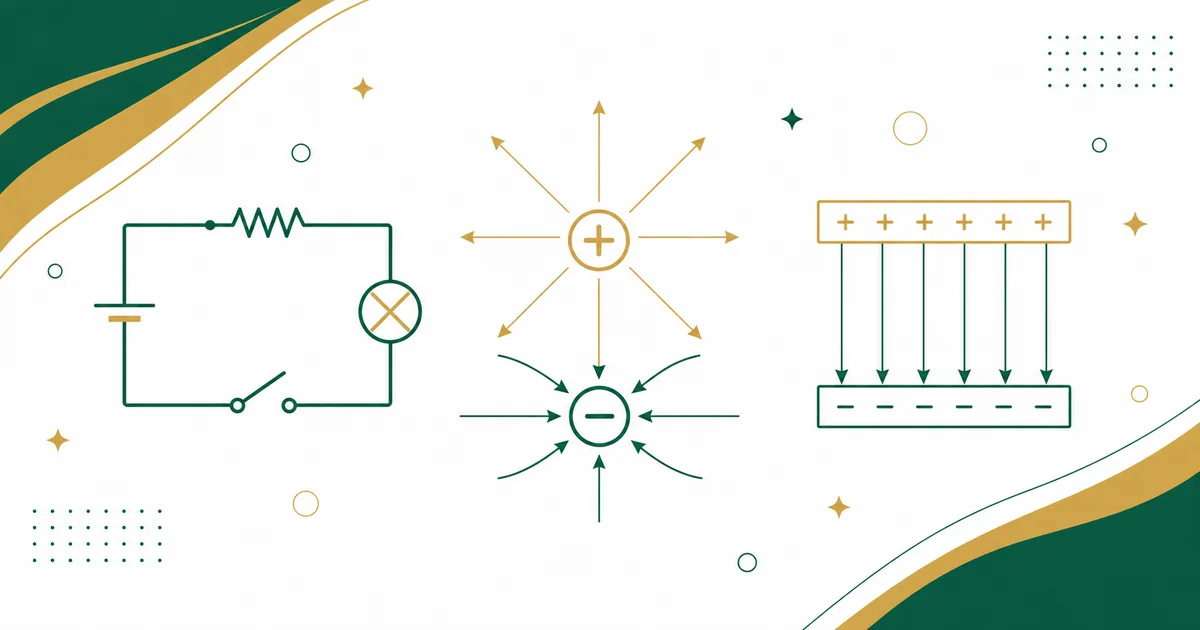
Modern Physics and Semiconductors form the final unit of the Class 12 Physics syllabus, and in many ways, it is the most rewarding. These chapters are conceptually rich yet mathematically lighter than Electromagnetism or Optics. If you are searching for Class 12 Physics Modern Physics coaching in Burari, this guide will show you exactly how to turn this unit into a near-perfect score. I have been teaching Class 12 Physics at Grow Up Coaching Centre in Sant Nagar for over ten years, and I have seen countless students use this unit to boost their overall Physics percentage significantly.
Why This Unit Is a Last-Minute Scorer's Best Friend
Let me be direct. By the time students reach the last unit in Class 12 Physics, many are exhausted. They have battled through Optics, fought with Electromagnetic Induction, and memorised countless derivations. They often approach Modern Physics and Semiconductors with fatigue, treating them as quick-read chapters. That is a mistake. These chapters are some of the most straightforward and mark-rich in the entire syllabus. In CBSE board exams, the unit typically carries 10 to 12 marks. In JEE Main, Modern Physics alone averages 2 to 3 questions per shift, and Semiconductors adds another question. The numericals are direct formula applications. The derivations are few and well-defined. The theory questions repeat predictably.
Students from Nathupura and Amrit Vihar who came to me feeling burnt out in January have managed to turn their Physics grades around in February simply by focusing on this unit with fresh energy. Do not neglect these chapters. They are your safety net.
Modern Physics — The World of the Very Small
Modern Physics in the Class 12 context primarily covers three areas: the Photoelectric Effect and the dual nature of radiation and matter, Atomic Physics (Bohr's model of the hydrogen atom), and Nuclear Physics (radioactivity, nuclear reactions, and binding energy). Each of these topics has a small set of core formulas, and each formula is connected to a clear physical story. If you understand the story, the formula is unforgettable.
Photoelectric Effect — The Experiment That Changed Physics
Einstein's photoelectric equation is KEmax = hν - φ, where φ is the work function of the metal. The stopping potential V₀ is related by KEmax = eV₀. The threshold frequency ν₀ = φ/h. The graphs of photocurrent versus potential, and stopping potential versus frequency, are extremely important. The slope of the stopping potential versus frequency graph is h/e, which is a universal constant. Board exams love asking for the interpretation of this slope and the intercept on the frequency axis.
One subtle point that many students miss: the saturation current depends on the intensity of light, but the stopping potential depends only on the frequency of light and the work function of the metal. Changing intensity shifts the current curve vertically; changing frequency shifts the stopping potential horizontally. Draw these two graphs side by side in your notes. The visual comparison is what embeds the concept firmly.
Bohr's Model of the Hydrogen Atom
The radius of the nth orbit is rn = n²h²ε₀/(πme²) or simply rn ∝ n². The energy of the electron in the nth orbit is En = -13.6/n² eV. The wavelength of the photon emitted when an electron jumps from n₂ to n₁ is given by 1/λ = R(1/n₁² - 1/n₂²), where R is the Rydberg constant. The spectral series — Lyman, Balmer, Paschen, Brackett, Pfund — are classified by the final orbit n₁ = 1, 2, 3, 4, 5 respectively. Know which series lies in the ultraviolet, visible, and infrared regions. Lyman is UV, Balmer is visible (the H-alpha line is red, 656.3 nm), and the rest are infrared. This classification is a one-mark question that appears in almost every board paper.
In our small batches at Sant Nagar, I make students draw the energy level diagram themselves, labelling each transition with the corresponding series name. That diagram alone can answer five different types of questions — from wavelength calculation to identifying the series from a given wavelength range.
Nuclear Physics — Binding Energy and Radioactivity
The binding energy per nucleon is the total binding energy of the nucleus divided by its mass number. The graph of binding energy per nucleon versus mass number shows a peak around iron (Fe-56), indicating maximum stability. Nuclear fission releases energy because heavy nuclei split into fragments closer to iron; nuclear fusion releases energy because light nuclei combine to move closer to iron. This graph is the single most important conceptual tool in nuclear physics. Understand it, and you understand why stars shine and why nuclear reactors work.
The law of radioactive decay is N = N₀ e^(-λt). The half-life T1/2 = ln2/λ = 0.693/λ. The mean life τ = 1/λ. Activity is measured in becquerel (Bq) or curie (Ci). Carbon dating and the age of rocks are the classic applications. The decay constant λ is independent of temperature and pressure — a fact that often appears as a true/false statement in competitive exams.
Semiconductors — The Physics of Modern Electronics
Semiconductors are materials whose conductivity lies between conductors and insulators. Silicon and germanium are the classic examples. The entire chapter revolves around the formation of a p-n junction and its behaviour under forward and reverse bias. From there, we build the p-n junction diode, the Zener diode, the photodiode, the LED, and the solar cell. Then comes the transistor — the workhorse of modern electronics — and finally logic gates, which are simple and highly scoring.
p-n Junction Diode and Rectification
In forward bias, the p-side is connected to the positive terminal of the battery. The depletion layer narrows, and current flows. In reverse bias, the depletion layer widens, and only a tiny leakage current flows. A diode acts as a rectifier. Half-wave rectification uses a single diode; full-wave rectification uses two diodes in a centre-tap transformer arrangement or four diodes in a bridge rectifier. The ripple factor for a full-wave rectifier is lower (0.48 versus 1.21 for half-wave). Draw the input and output waveforms for both types. Board questions frequently ask you to sketch these waveforms and label the periods of conduction.
The Zener diode is designed to operate in the breakdown region under reverse bias. It is used as a voltage regulator. The key circuit has a series resistor RS and the Zener diode in parallel with the load. The Zener maintains a constant voltage across the load as long as the input voltage is above the Zener breakdown voltage. Understand the current distribution in this circuit — it is a two-mark or three-mark explanation question in boards.
Transistors and Logic Gates
A bipolar junction transistor (BJT) can be npn or pnp. In an npn transistor, the emitter is heavily doped, the base is thin and lightly doped, and the collector is moderately doped. The transistor can act as a switch (cut-off and saturation regions) or an amplifier (active region). The current gain in common-emitter configuration is β = IC/IB, and it is typically large (50 to 300). The relation IE = IC + IB is from Kirchhoff's current law and holds exactly.
Logic gates — AND, OR, NOT, NAND, NOR, XOR — are the most scoring part of the entire Class 12 Physics syllabus. You only need to learn the truth tables for about seven gates, and the universal gates (NAND and NOR) can implement any Boolean function. Questions that ask you to draw the circuit for a given Boolean expression or to write the truth table for a combination of gates are direct and require no numerical calculation. Practise making truth tables for two-input gates, then for three-input combinations. Do it ten times, and you will never miss a mark on this topic. Students from Bengali Colony and Himgiri Enclave have laughed at how simple these questions feel after a day of focused practice.
Common Mistakes in Modern Physics and Semiconductors
These are the errors I have corrected hundreds of times in my Burari classroom.
- Forgetting to convert units of energy consistently. Photoelectric effect problems often give work function in eV and photon energy in joules or vice versa. Always convert everything to either eV or joules before equating. 1 eV = 1.6 × 10⁻¹⁹ J. Write this conversion factor on your question paper the moment you enter the exam hall.
- Confusing stopping potential with accelerating potential. Stopping potential is the negative potential that just stops the most energetic photoelectrons. It is a positive number, but the applied voltage is negative. Many students write V₀ = KEmax/e but then assign the wrong sign in graph interpretations. The stopping potential is the magnitude of the retarding voltage needed.
- Using the Rydberg formula with incorrect n₁ and n₂. For emission, n₂ > n₁. For absorption, n₁ < n₂. The final state is always the lower energy state in emission and the higher energy state in absorption. Label which is initial and which is final before substituting numbers.
- Mixing up forward bias and reverse bias connections in p-n junction diagrams. Forward bias: p to positive, n to negative. Reverse bias: p to negative, n to positive. A simple mnemonic: PPP — P-type to Positive for forward bias. Draw the circuit every time. Never rely on memory alone.
- Forgetting that NOT gate output is simply the inverted input. In truth table questions with combinations of gates, calculate the output step by step, starting from the inputs. Write intermediate outputs at each gate. Rushing to the final answer without intermediate steps leads to careless errors.
How to Score Full Marks in This Unit
- Make a formula strip for Modern Physics. List every formula: Einstein's photoelectric equation, stopping potential relation, de Broglie wavelength λ = h/p, Bohr's radius formula, energy formula, Rydberg formula, radioactive decay law, half-life, mean life, binding energy per nucleon. Keep it to one page. Revise it daily in the last two weeks before the exam.
- Practise semiconductor circuits actively. Redraw the half-wave and full-wave rectifier circuits from memory. Redraw the Zener voltage regulator. Redraw the common-emitter transistor amplifier. Being able to reproduce these circuits quickly gives you confidence and saves time in the exam.
- Memorise truth tables by writing them, not by reading them. Write the truth table for AND, OR, NOT, NAND, NOR, XOR on a blank page every morning for a week. It takes two minutes. By the end of the week, you will know them so well that any gate combination will feel easy.
- Solve previous year board questions specifically from this unit. You will notice that photoelectric effect graphs, Bohr's model spectral series, binding energy curve, half-life calculations, rectifier waveforms, and logic gate truth tables appear with high regularity. Focus your practice on these six specific areas.
Why Personalised Coaching Brings Out the Best in This Unit
These chapters reward clarity. A student who understands why the stopping potential does not depend on intensity can answer four related questions correctly. A student who is merely memorising that fact might freeze if the question is phrased differently. At Grow Up Coaching Centre in Sant Nagar, Burari, I make sure every student can explain these concepts back to me. That is the real test of understanding — can you teach it to someone else?
Students from Kamal Vihar and Laxmi Vihar who joined our small batches discovered that Modern Physics, which they once found abstract, became one of their strongest topics. When you can see the energy level diagram clearly in your mind and trace the electron's journey from one orbit to another, the formulas stop being arbitrary symbols and start telling a logical story.
Three Teacher-Tested Tips for Mastering Modern Physics and Semiconductors
Tip 1: Always draw the energy level diagram before solving Bohr model problems. Sketch the orbits, label the energy values in eV, and draw an arrow for the transition. This diagram makes it immediately clear whether the question is about emission or absorption, and it helps you identify the series. A 30-second sketch can prevent a 5-mark mistake.
Tip 2: Use the binding energy per nucleon graph as a decision tool. Whenever a question asks whether energy will be released or absorbed in a nuclear reaction, look up the binding energy per nucleon of the reactants and products. If the products have higher binding energy per nucleon, the reaction releases energy. This single graph answers questions on fission, fusion, and nuclear stability. Print it out and stick it on your study wall.
Tip 3: Build logic gate circuits mentally using the universal gate approach. Any logic circuit can be constructed using only NAND gates or only NOR gates. When you encounter a complex Boolean expression, try to visualise it as a combination of AND and OR operations, each of which can be replaced by a NAND-NAND or NOR-NOR equivalent. This skill is valued in JEE and engineering entrance exams beyond just the Physics paper.
Why Grow Up Coaching Centre Is the Right Choice for Class 12 Physics in Burari
We are a neighbourhood centre in Sant Nagar, 110084 that believes in depth over breadth. Our Class 12 Physics program covers every chapter thoroughly, but we place special emphasis on the final unit because we know it is often rushed in schools. We give it the time and attention it deserves. Families from Bengali Colony, Nathupura, Rishi Nagar, and all across Burari trust us because we treat their child's success as our own.
Modern Physics and Semiconductors can feel unfamiliar at first. They deal with particles you cannot see and concepts that defy everyday intuition. But with the right teacher, these chapters transform from intimidating to empowering. I have watched it happen year after year in my classroom.
Take the First Step — Book a Free Demo Class
The best way to see if our teaching style works for you is to experience it yourself. We offer a free demo class on Modern Physics or Semiconductors. Come, sit in a session, ask questions, and see how we make these concepts clear and exam-ready. There is no cost and no commitment.
To book your free demo, call or WhatsApp 096671 22571. You can also visit Grow Up Coaching Centre at Sant Nagar, Block B, Burari, New Delhi – 110084. We are easy to reach from all nearby colonies. If you have already attended our classes or seen the results of our teaching, please take a moment to leave a Google review. It helps other families in Burari discover quality Class 12 Physics Modern Physics coaching in Burari, and every review is deeply appreciated by our small team.
You may also find our other PCM study guides helpful as you plan your preparation.
FAQs
What are the most important topics in Class 12 Modern Physics for CBSE board exams?
The most important topics are Einstein's photoelectric equation and the graphs related to it, Bohr's model of the hydrogen atom including spectral series, the law of radioactive decay and half-life calculations, and the binding energy per nucleon curve with its implications for fission and fusion. These four areas consistently appear in board papers as numericals, derivations, or graph-based questions. Focus your preparation on mastering these core concepts thoroughly.
How can I easily remember all the logic gates and their truth tables?
The easiest method is to practise writing truth tables by hand daily for one week. Start with the three basic gates — AND, OR, NOT — and then learn NAND and NOR as the inverted versions of AND and OR respectively. XOR gives output 1 only when the inputs are different. Create a small flashcard for each gate with its symbol, Boolean expression, and truth table. Review these cards during short breaks, and within days the gates will become second nature.
Where can I find focused Class 12 Physics coaching for Modern Physics in Burari?
Grow Up Coaching Centre in Sant Nagar, Block B, Burari, New Delhi – 110084 offers small-batch Class 12 PCM coaching with dedicated attention to Modern Physics and Semiconductors. The centre provides board and JEE-focused preparation, personalised doubt-clearing, and a free demo class for new students. It is conveniently located for students from Sant Nagar, Bengali Colony, Kamal Vihar, Nathupura, and all surrounding areas. To book a free demo class, call or WhatsApp 096671 22571.
Book a FREE Class 12 Physics Demo
Sant Nagar, Burari · Mon–Sat 9 AM–9 PM · Call or WhatsApp 096671 22571
💬 WhatsApp a Demo